
Where Has This Year’s Snow Gone?
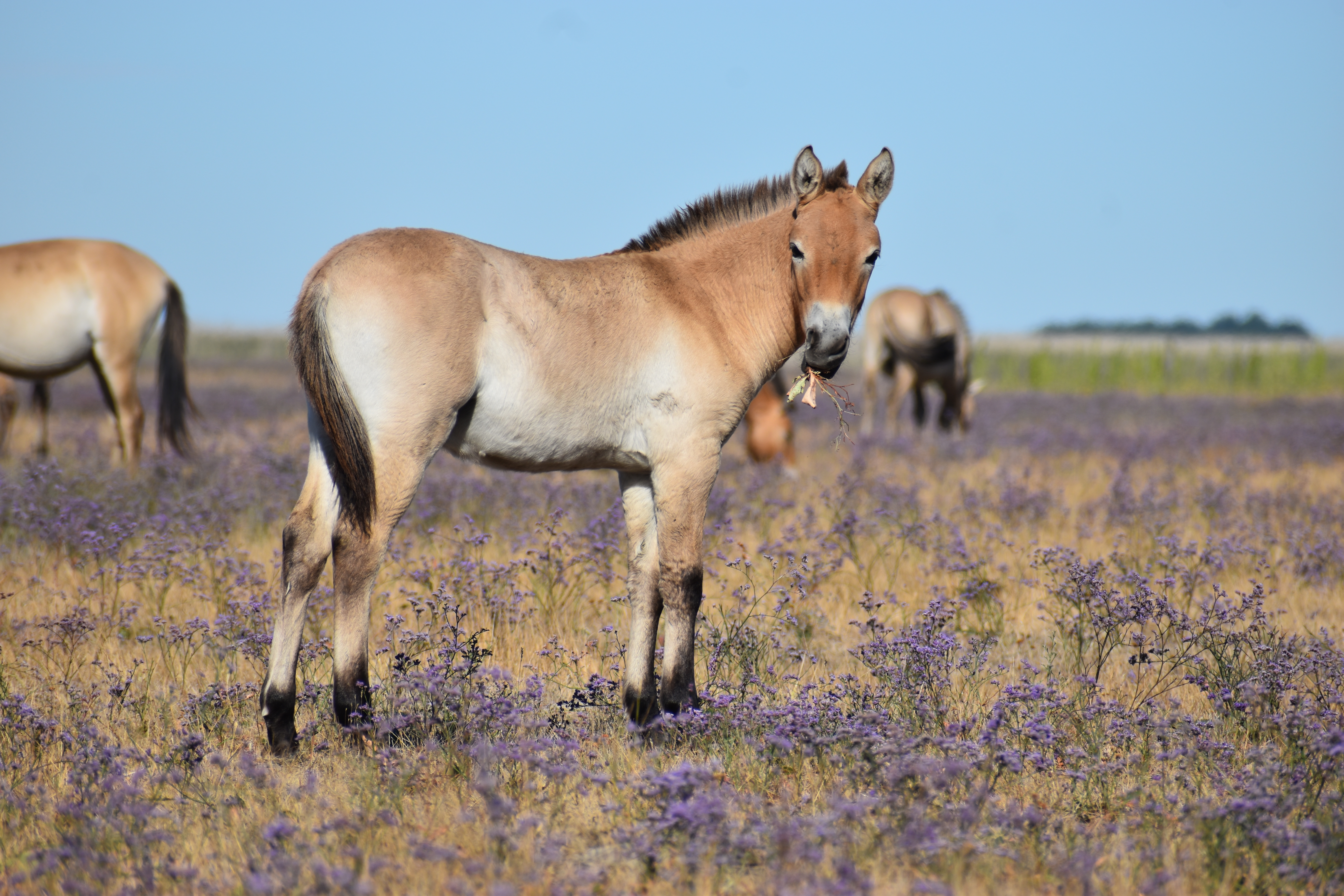
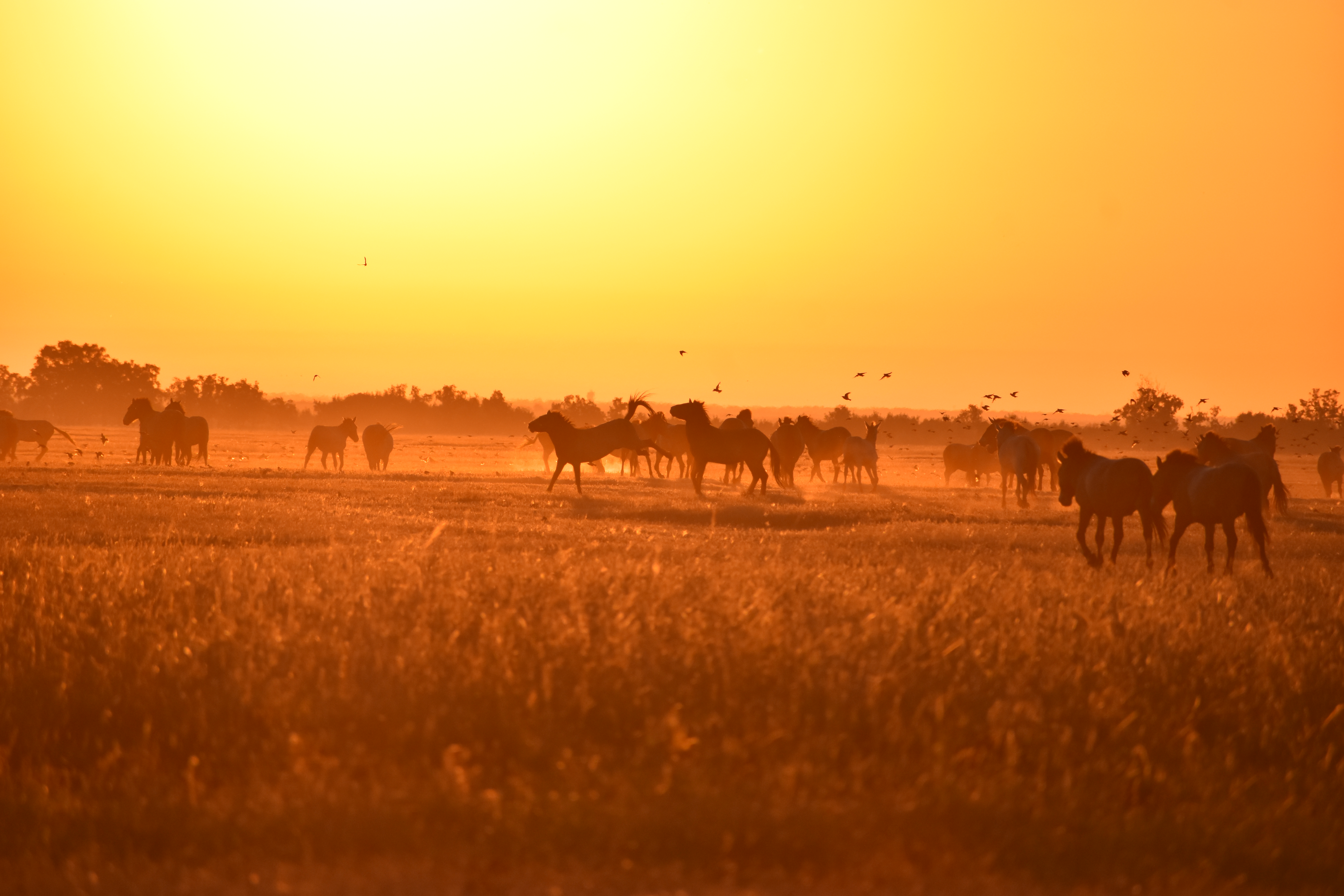
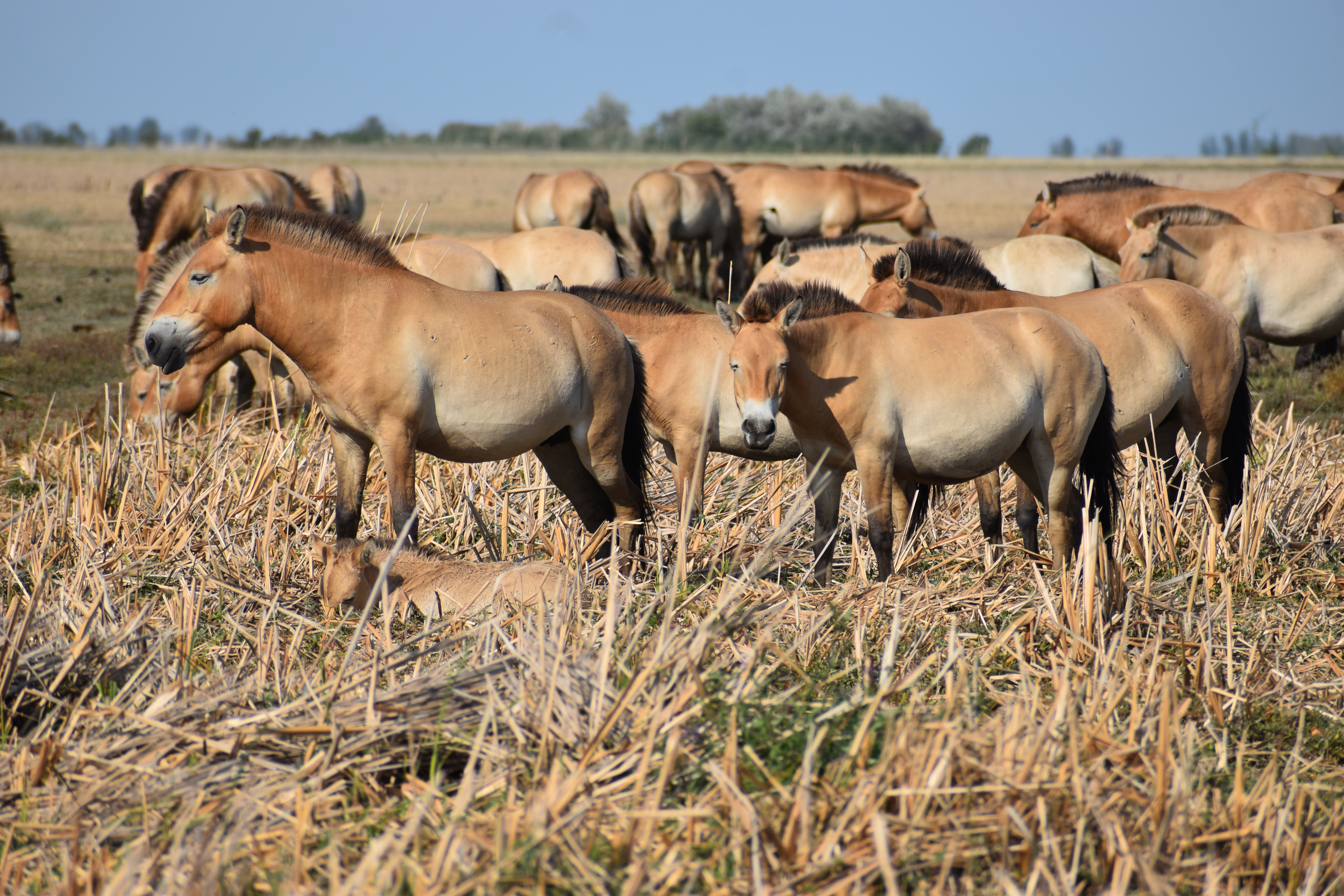
We last shared news about the Przewalski’s horses and our hardy breed cattle, the so called reconstructed aurochs, living in the Pentezug Reserve after the heavy snowfall in January. Back then, with temperatures close to −20°C and snow cover exceeding 20 cm, it would have been difficult to imagine that spring and summer would turn out to be so hot and dry. In April, for example, no precipitation fell at all, and by the end of August our weather station has recorded only 150 mm of precipitation this year.

It is under such extreme weather conditions that we can truly see how well the animals in the Reserve have adapted to the harsh conditions of the alkaline steppe over the past nearly 30 years. The animals originally brought here from zoos have now given rise to generations of descendants that are remarkably well adapted to this environment.
In spring, the horses shed the thick winter coats that had protected them during the severe cold and snow, and both the horses and cattle made it through two summer heatwaves, with temperatures reaching 40°C, in their short summer coats. Although the shallow wetlands filled by melting snow dried out quickly, the animals have had continuous access to the Árkus Canal, where they can drink and bathe.
There has been no shortage of new arrivals either: more than 20 foals and 70 cattle calves are now roaming the Reserve.
Our data on habitat use clearly show that during this drought, the Przewalski’s horses and cattle cover much larger areas in search of food. Studies of their feeding preferences also show that, much like during winter, they broaden their diet when conditions become difficult. In addition to their usual forage plants, they consume varying amounts of sedges, reeds, leaves, and even sea lavender, which is currently turning parts of the steppe purple. In this way, they make use of virtually every available food source.
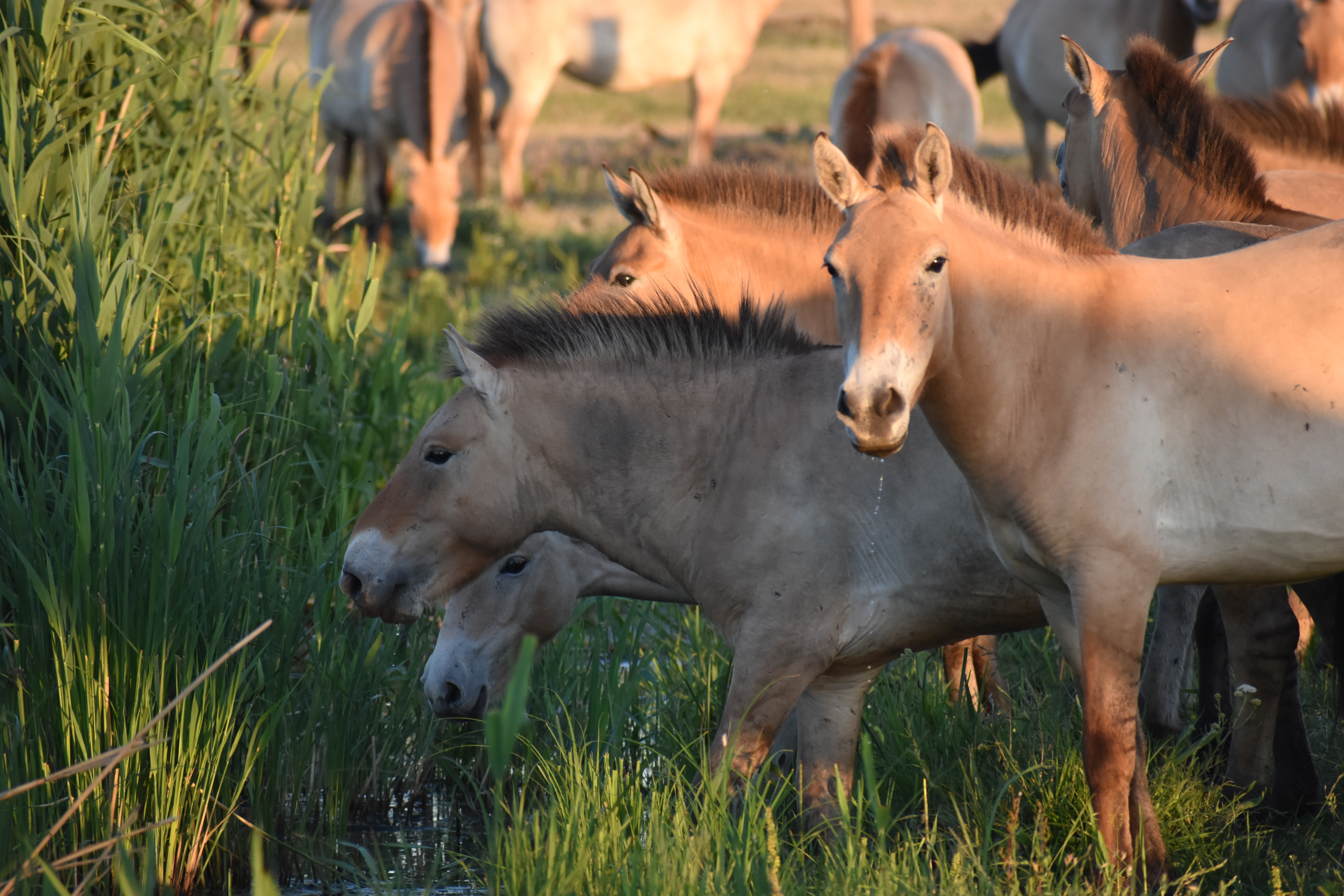
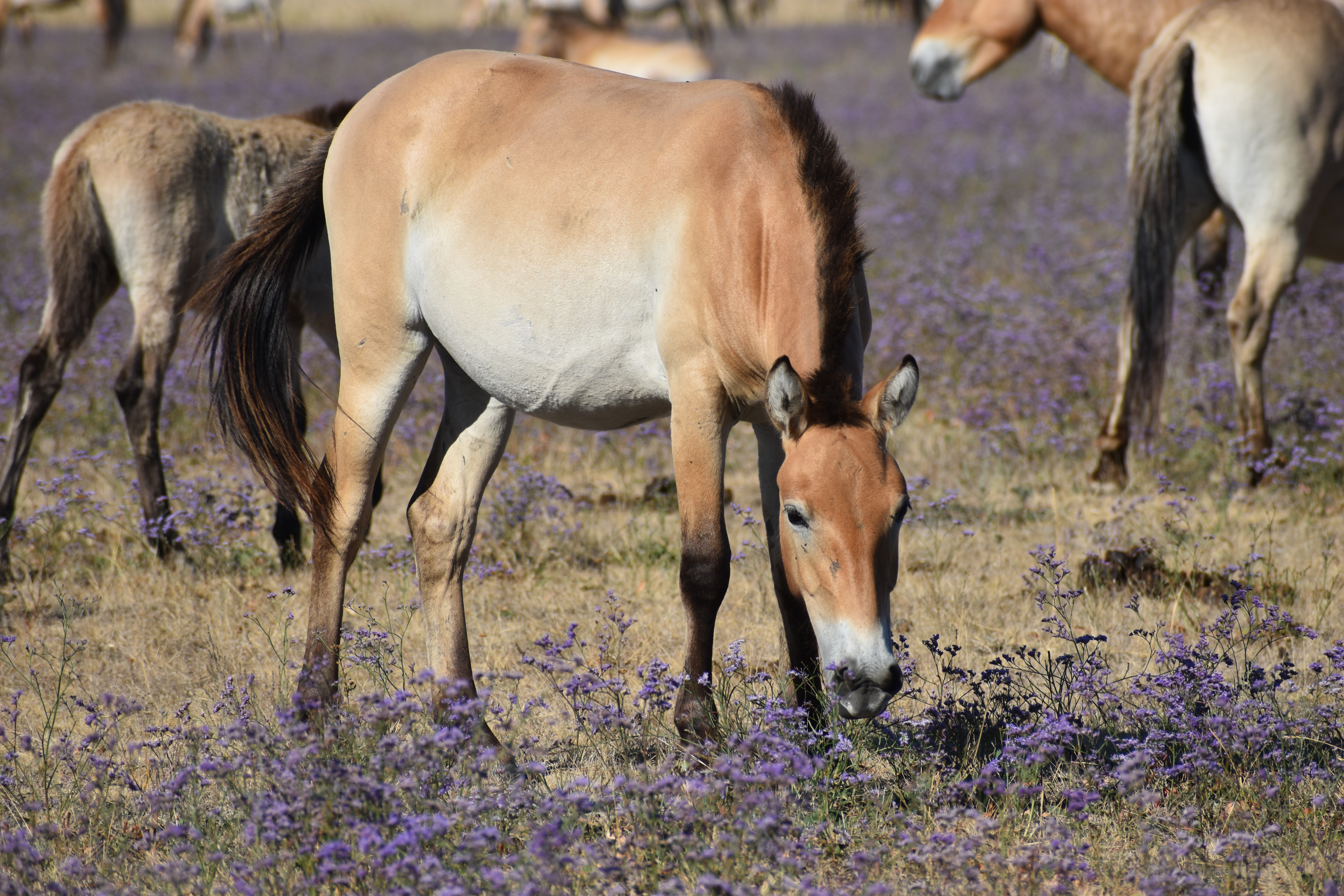
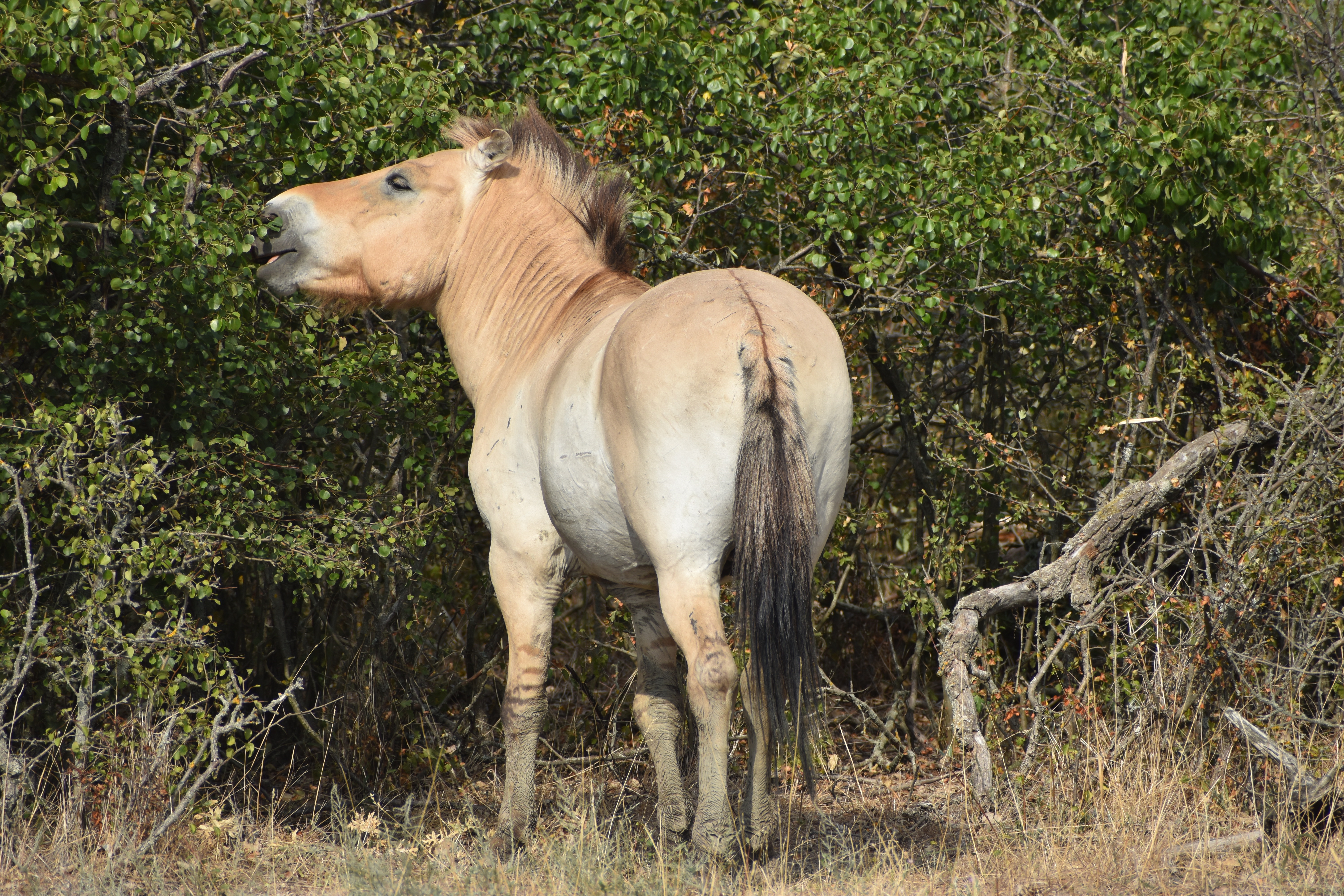
Reeds growing along the riverbank, sea lavender or perhaps some wild pear.
The hot weather also favours insects, which sometimes swarm in huge clouds around animals resting in the middle of the steppe. Large flocks of starlings take advantage of this abundant food source, feeding on the insects around the herds. Interestingly, neither the horses nor the cattle use the patches of woodland that provide shade within the Reserve, even during the hottest part of the day.
As we wrote in our winter post, these animals do not currently need any help from us. We know this because we continuously monitor the body condition of both the horses and cattle, as well as the state of the vegetation and the availability of drinking water throughout the Reserve. We are prepared to intervene if necessary, but as long as the animals show no signs of declining condition, we do not interfere.
After all, the aim of the project has never been to create an animal population dependent on people and maintained despite the limitations imposed by nature. From the very beginning, the goal has been to allow a self-sustaining system capable of adapting to changing environmental conditions to develop.
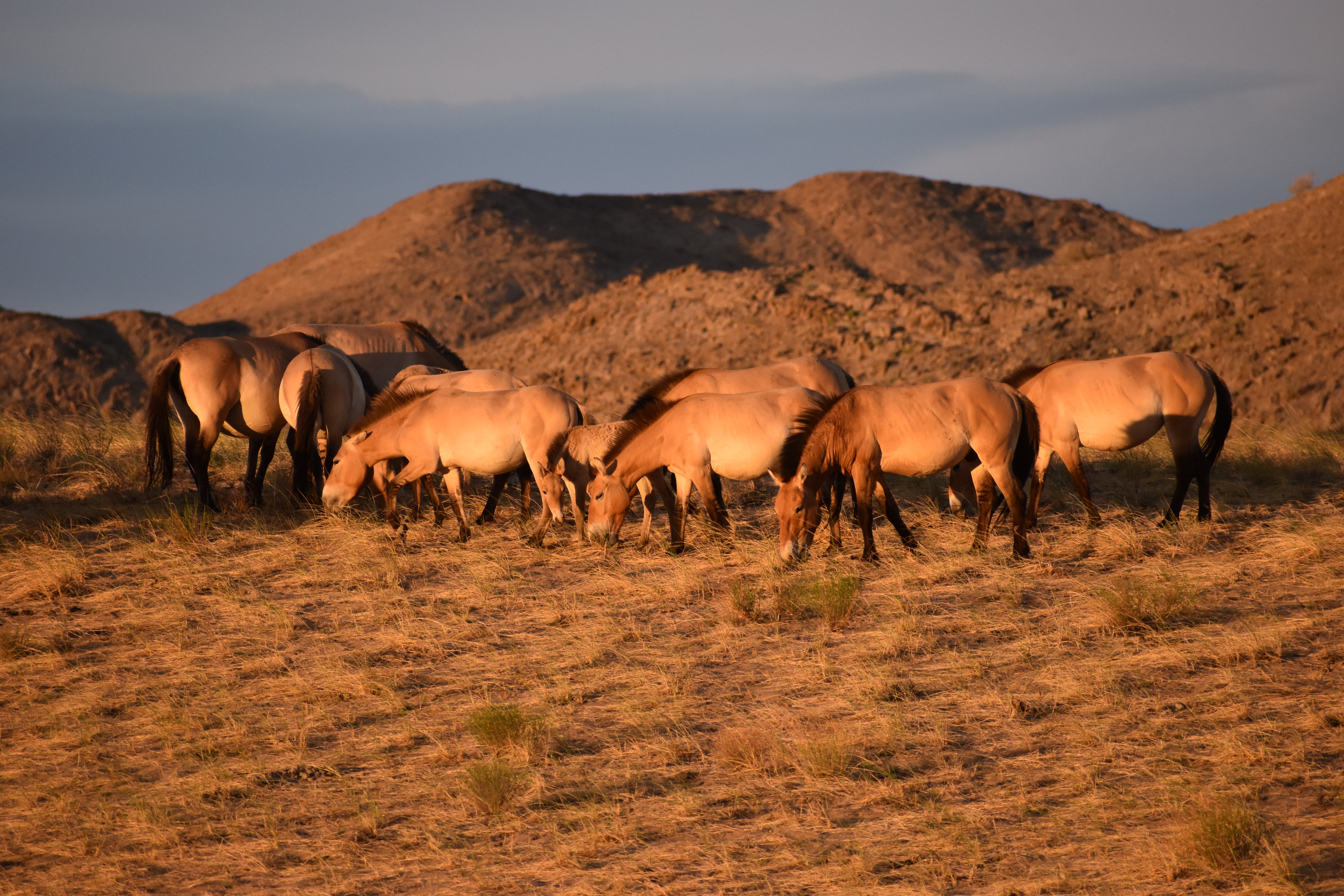
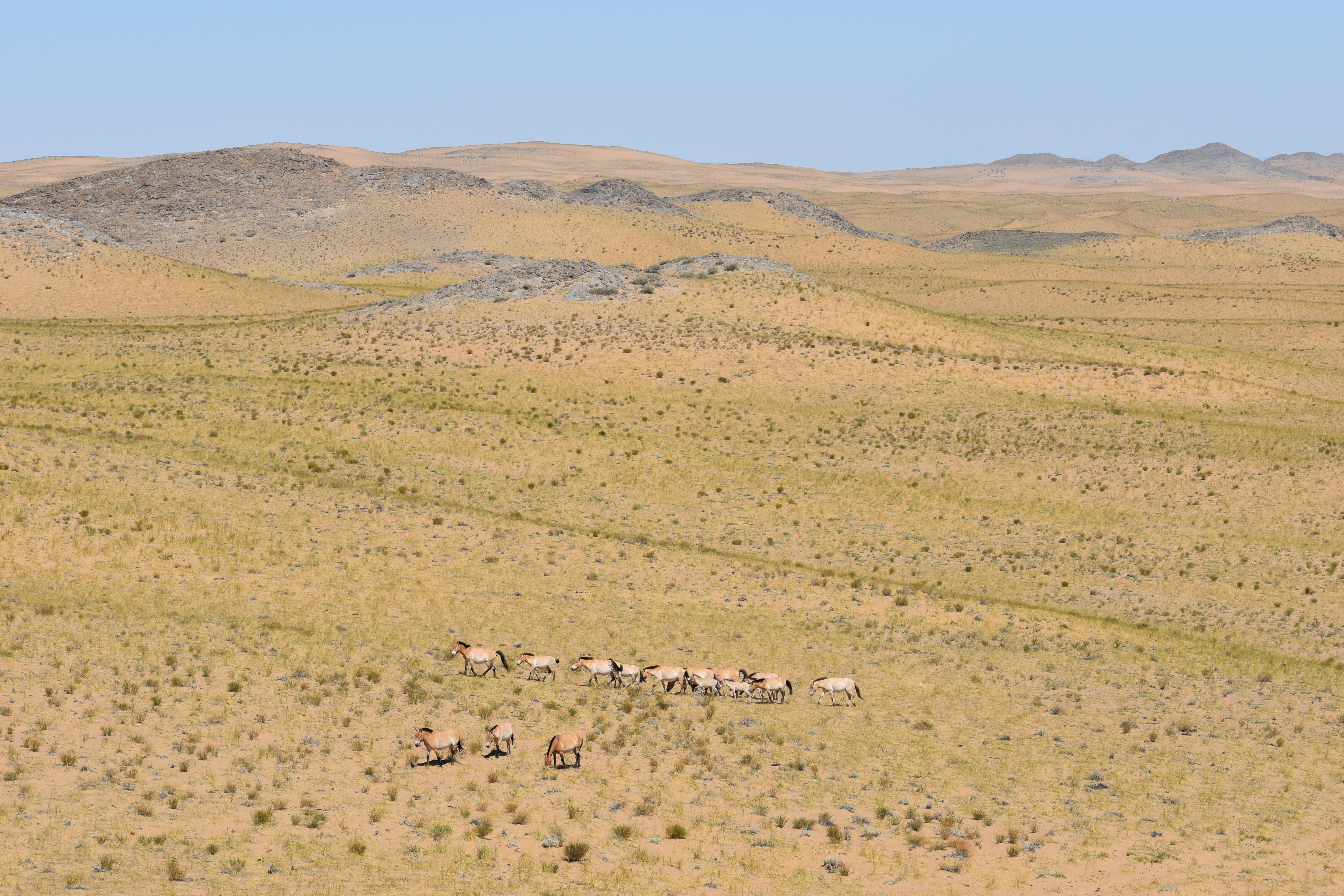
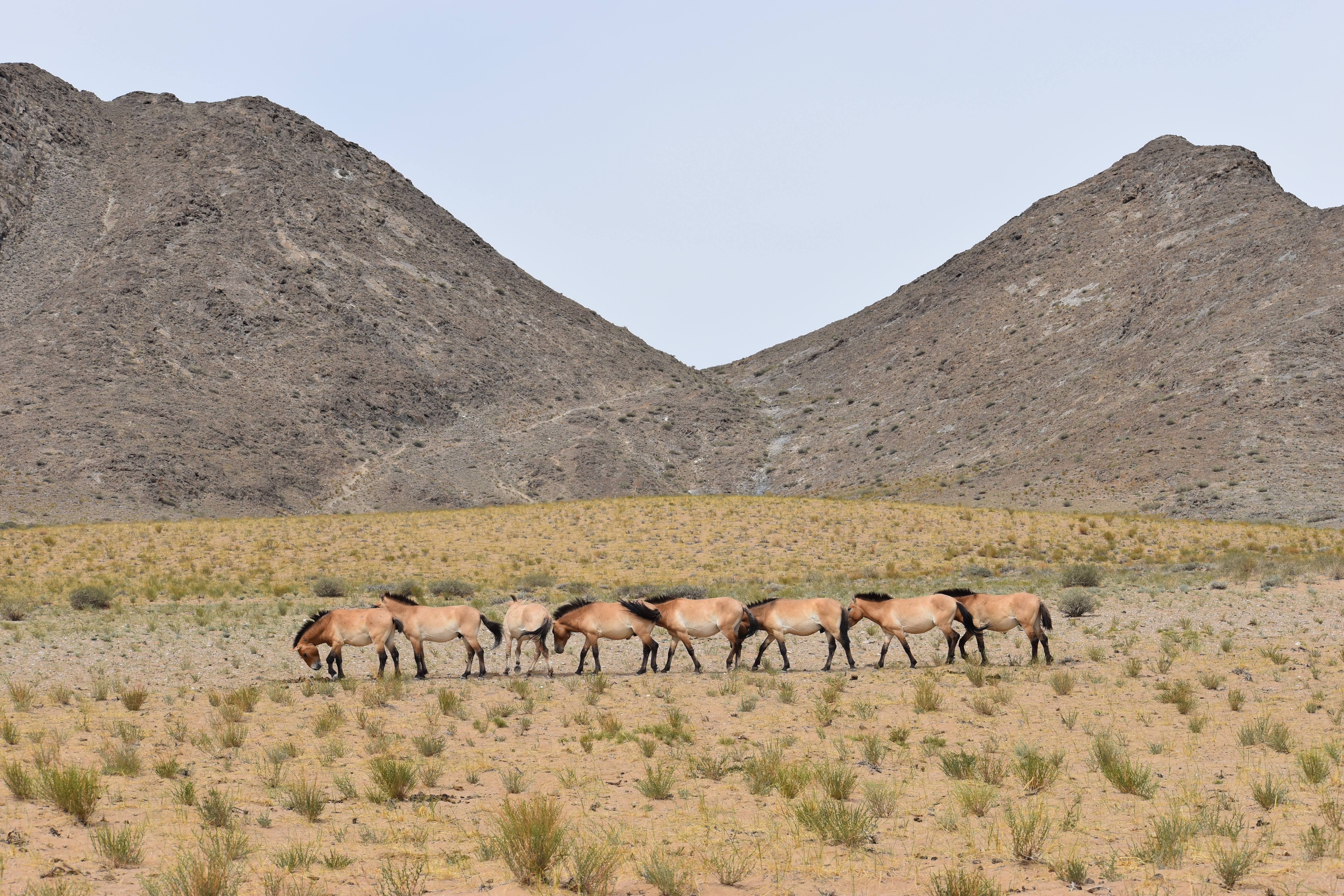
Khomyn-Tal National Park
Przewalski’s horses are particularly well adapted to extreme steppe climates. In Mongolia, for example, they cope successfully with temperatures ranging from around −40°C in winter to +40°C in summer, often in areas with much sparser vegetation. As long as they have sufficient space and access to water, they are remarkably capable of dealing with such extremes.
Written and photographed by:
Péter Csobán
Pentezug Reserve